
Laos doesn’t try to impress you. There are no neon skylines, no crowded beach clubs, no queues wrapped around famous landmarks. What you get instead is something quieter: golden temples catching the morning light in Luang Prabang, longtail boats gliding down the Mekong, and mountain villages where life still moves at the pace it always has. If you’re looking for a country that rewards patience over rushing, this Laos travel guide will walk you through everything — visas, the best time to visit, where to go, how much to budget, and a ready-to-use itinerary — so you can plan a trip that actually matches what Laos is like on the ground.
Laos has quietly become one of Southeast Asia’s fastest-growing destinations, and for good reason. It sits between Thailand, Vietnam, Cambodia, China, and Myanmar, making it easy to combine with a wider regional trip, yet it still feels far less touristy than its neighbors. Whether you have a long weekend or two full weeks, this guide will help you plan smart.
Why Visit Laos?
Laos offers a mix that’s genuinely hard to find elsewhere in the region:
- UNESCO heritage without the crowds. Luang Prabang is a full UNESCO World Heritage city, but you can still walk its streets at sunrise without fighting for space.
- Dramatic, underexplored landscapes. Limestone karsts, waterfalls, caves, and the wide, island-studded Mekong in the south.
- A slower pace of travel. Laos isn’t built for rushing between fifteen attractions a day — and that’s the point.
- Affordability. Even against Thailand or Vietnam, Laos remains one of the better-value countries in Southeast Asia.
- Genuine cultural depth. Buddhist traditions, ethnic minority communities, and a French-colonial layer that shows up in the architecture and food.
Best Time to Visit Laos
Laos has a tropical monsoon climate, and timing your trip well makes a real difference to how much you enjoy it.
Dry season (November–April) — the best time to visit Laos for most travelers
This is peak season, and for good reason. Skies are clear, humidity is lower, and roads and rivers are easier to navigate. December and January are the most comfortable months temperature-wise, especially in the mountainous north around Luang Prabang and Nong Khiaw, where evenings can get genuinely cool. March and April bring rising heat and, in some years, seasonal smoke haze from agricultural burning in the region — worth knowing if you have respiratory sensitivities.
Green season (May–October)
The rains bring lush, vivid landscapes, dramatically lower prices, and far fewer tourists. Waterfalls like Kuang Si are at their most powerful. The trade-off is that some rural roads become difficult, river levels can disrupt certain boat routes, and you’ll want a flexible itinerary. If you don’t mind afternoon downpours (mornings are often clear), this is an underrated time to visit.
Festival season
If you can time your trip around a festival, do it:
- Pi Mai Lao (Lao New Year), mid-April — nationwide water festival, similar in spirit to Songkran in Thailand, with celebrations lasting several days.
- Boun That Luang, November — a major religious festival centered on Vientiane’s most sacred stupa, drawing pilgrims from across the country.
Quick recommendation: For a first-time trip focused on sightseeing and comfortable travel, aim for November to February. For lower prices, greener scenery, and fewer crowds, consider June or September, avoiding the heaviest rains of July and August.
Laos Visa Requirements (What You Actually Need)
Visa rules are one of the most commonly outdated pieces of travel advice online, so it’s worth double-checking the current situation directly before you fly, but here’s the general framework:
- Visa-exempt travelers: Citizens of most ASEAN countries and a small number of other nations can enter without a visa for a limited stay.
- E-visa: Widely available to citizens of well over a hundred countries, including most of North America, Europe, Australia, and much of Asia. This is generally the fastest and most reliable option — you apply online in advance, and it typically permits a stay of around 30 days.
- Visa on arrival: Still offered at major airports (Vientiane, Luang Prabang, Pakse) and key land border crossings, including the Laos–Thailand Friendship Bridge. It’s convenient but can mean long queues during peak season, so it’s not the most reliable option if you’re traveling around major holidays.
- Visa from an embassy: Required for a smaller number of nationalities, or preferred by travelers who want everything sorted before departure.
Practical requirements to check before you go:
- Passport valid for at least six months beyond your entry date, with at least two blank visa pages
- A passport photo for visa-on-arrival applications
- Laos has also been rolling out a digital arrival registration system at major entry points, so check whether you need to complete any online arrival form before travel — this has been changing recently, so verify on the official government visa platform or your nearest Lao embassy site shortly before departure
How to Get to Laos
Laos travel guide has three main international airports: Wattay International Airport in Vientiane, Luang Prabang International Airport, and Pakse International Airport in the south. Regional carriers connect these to hubs like Bangkok, Hanoi, Ho Chi Minh City, Singapore, and Kuala Lumpur — there are currently no long-haul direct flights from outside Asia, so most travelers connect through Bangkok.
Overland options are popular too:
- The classic slow boat down the Mekong from Huay Xai (near the Thai border) to Luang Prabang, usually done over two days with an overnight stop in Pakbeng
- Bus or train crossings from Vietnam into Vientiane or northern Laos
- The land border from Cambodia in the far south, which puts you right at the doorstep of the 4000 Islands
Getting Around Laos
Infrastructure has improved significantly with the Laos-China Railway, which now links Vientiane to Luang Prabang and on to the Chinese border in just a few hours — a huge upgrade from the old road journey. Beyond the railway, expect:
- VIP buses and minivans connecting major towns, though mountain roads can be slow and winding
- Tuk-tuks and songthaews (shared pickup trucks) for short and local trips
- Scooter rental in towns like Vang Vieng and Luang Prabang for independent exploring
- Boats for river routes, especially in the north and around the 4000 Islands in the south
Budget extra time for road journeys — distances that look short on a map can take hours longer than expected.
Top Destinations: Where to Go in Laos
Luang Prabang
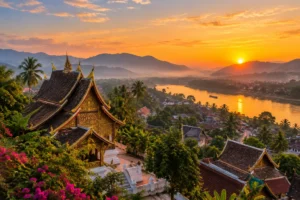
The cultural heart of the country and most visitors’ first stop. Wander the old quarter’s saffron-robed monks and gilded temples like Wat Xieng Thong, catch the alms-giving ceremony at dawn (respectfully, from a distance), climb Mount Phousi for sunset views over the Mekong and Nam Khan rivers, and don’t skip the turquoise pools of Kuang Si Falls, about an hour outside town. The night market here is one of the best in the region for local handicrafts.
Vang Vieng
Once known purely for its rowdy backpacker tubing scene, Vang Vieng has reinvented itself as an adventure and nature hub. Kayak or tube down the Nam Song River, explore limestone caves like Tham Chang, cycle through surrounding rice paddies and villages, or take a hot air balloon ride over the karst mountains at sunrise — one of the most photographed experiences in the country.
Vientiane
Laos’s laid-back capital is less about big sights and more about atmosphere. Visit Pha That Luang, the country’s most sacred stupa, wander the surreal sculpture park at Buddha Park, and spend an evening at the riverside night market along the Mekong, with Thailand visible on the opposite bank.
Nong Khiaw and Muang Ngoi
A quieter alternative in the north, surrounded by dramatic limestone cliffs. It’s an easy add-on between Luang Prabang and further trekking routes, and still sees relatively few tourists compared to the more established stops.
The Bolaven Plateau
Southern Laos’s coffee-growing highlands, dotted with waterfalls and ethnic minority villages. A road trip loop here is a favorite among travelers who rent a motorbike and take a few unhurried days to explore.
Si Phan Don (4000 Islands)
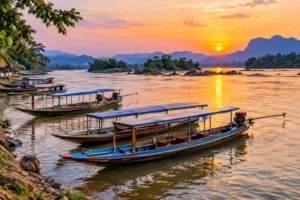
In the far south, the Mekong widens into a maze of islands, sandbars, and channels. Don Det and Don Khon are the most visited — think hammocks, slow boat rides, waterfalls, and (if you’re lucky) glimpses of the rare Irrawaddy dolphin near the Cambodian border.
Quick comparison:
| Destination | Best For | Vibe |
|---|---|---|
| Luang Prabang | Culture, temples, waterfalls | Refined, historic |
| Vang Vieng | Adventure, outdoor activities | Energetic, scenic |
| Vientiane | History, food, local life | Relaxed, low-key |
| Si Phan Don | Nature, slowing down | Very quiet |
Sample Laos Itineraries
7 days in Laos (the essentials)
- Days 1–3: Luang Prabang — temples, Kuang Si Falls, night market, Mount Phousi sunset
- Day 4: Travel to Vang Vieng (by the new railway, in a couple of hours)
- Days 5–6: Vang Vieng — kayaking, caves, hot air balloon, cycling
- Day 7: Vientiane for a final day of sightseeing before departure
14 days in Laos (north to south)
- Days 1–4: Luang Prabang and a side trip to Nong Khiaw
- Days 5–7: Vang Vieng
- Days 8–9: Vientiane
- Days 10–11: Bolaven Plateau road loop from Pakse
- Days 12–14: Si Phan Don (4000 Islands) before flying home from Pakse
This route works equally well in reverse if you’re entering from Cambodia in the south.
Where to Stay in Laos
- Luang Prabang: Boutique colonial-style guesthouses in the old town are the standout choice, and generally affordable compared to similar properties elsewhere in Southeast Asia.
- Vang Vieng: Riverside bungalows with karst mountain views are worth the small premium over in-town options.
- Vientiane: Mid-range hotels near the Mekong riverside put you within walking distance of the main sights and night market.
- Si Phan Don: Simple hammock-and-bungalow stays on Don Det, or slightly more polished options on Don Khon for a quieter pace.
What to Eat in Laos
Lao food is distinct from its neighbors and deserves its own detour:
- Laap (larb) — a minced meat salad with herbs, lime, and toasted rice powder, often considered the national dish
- Sticky rice (khao niew) — served in a woven basket and eaten by hand with almost every meal
- Tam mak hoong — a spicier Lao cousin of Thai papaya salad
- Mok pa — fish steamed in banana leaf with herbs
- Fresh Mekong river fish, grilled and served whole with dipping sauces
- Beerlao — the ubiquitous national beer, and something of a rite of passage
Budget Guide: How Much Does Laos Cost?
Laos remains one of the more affordable countries to travel in Southeast Asia, though prices have been rising with tourism growth.
- Budget travelers: Roughly $25–40/day covering guesthouses, street food, and local transport
- Mid-range travelers: Roughly $50–90/day for boutique stays, a mix of local and Western meals, and some guided activities
- Money tips: Cash (Lao kip, with US dollars widely accepted for larger purchases) is essential outside major hotels — ATMs are limited once you leave the bigger towns, so withdraw what you need before heading to rural areas or the islands
Culture, Etiquette, and Safety Tips
- Dress modestly when visiting temples — shoulders and knees covered.
- Don’t touch monks (especially if you’re a woman) or point your feet at Buddha images or people.
- Remove shoes before entering homes and temples.
- Bargain gently in markets, but keep it friendly — aggressive haggling is considered rude.
- Avoid Xaisomboun Province, east of Vang Vieng, where travel advisories have flagged occasional security incidents on rural roads.
- General safety: Laos is considered a safe destination overall; the main risks are road safety (slow down on mountain routes), petty theft, and — if you’re trekking or visiting remote areas — sticking to marked paths due to unexploded ordnance from historical conflicts in some rural regions.
What to Pack for Laos
- Lightweight, breathable clothing plus one modest outfit for temples
- A light jacket for cooler nights in Luang Prabang, Vang Vieng, and the northern hills (especially December–January)
- Sturdy sandals or trekking shoes for waterfalls and caves
- A reusable water bottle and basic water purification, since tap water isn’t safe to drink
- Mosquito repellent and a basic first-aid kit
- A portable power bank — outlets can be scarce on long bus or boat journeys
Frequently Asked Questions About Traveling in Laos
Is Laos worth visiting?
Yes — especially if you want Southeast Asia without the heavier crowds of Thailand or Vietnam. Its blend of temples, river landscapes, and outdoor adventure makes it a strong stop on its own or combined with a wider regional trip.
How many days do you need in Laos?
A week covers the highlights (Luang Prabang and Vang Vieng). Two weeks lets you add Vientiane, the Bolaven Plateau, and the 4000 Islands for a fuller north-to-south route.
Is Laos expensive?
No — it remains one of the more budget-friendly countries in the region, though prices are gradually rising as tourism grows.
Do I need a visa for Laos?
Most travelers can get an e-visa online before arrival or a visa on arrival at major airports and border crossings, though requirements vary by nationality — always verify current rules before you fly.
What’s the best way to get around Laos?
A mix of the Laos-China Railway for longer north–south journeys, buses and minivans for shorter hops, and boats or tuk-tuks locally.
Final Thoughts
A trip to Laos rewards travelers who are willing to slow down. It’s not a country you rush through ticking off landmarks — it’s one you move through gently, letting the Mekong, the temples, and the mountains set the pace. Whether you have a week or two, the combination of Luang Prabang’s temples, Vang Vieng’s karst landscapes, and the quiet drift of the 4000 Islands makes for one of Southeast Asia’s most rewarding — and still refreshingly uncrowded — trips.
See more amazing Information visit: indochina-services