
India is not a country you “finish.” You can spend a lifetime exploring the tourist places in India and still find a village, a temple, a beach or a mountain pass you never knew existed. It has snow-covered Himalayan peaks in the north, tropical beaches in the south, desert forts in the west and misty tea gardens in the east. It has more than 4,000 years of recorded history and a food culture that changes every few hundred kilometres.
This India travel guide covers the best places to visit in India, and it is written for first-time visitors, returning travellers and Indians planning a domestic holiday. For each destination you will find why it matters, what to do there, when to go, and practical tips. There are also sections on planning, budgeting, safety and sample itineraries.
Why India Is a World-Class Travel Destination
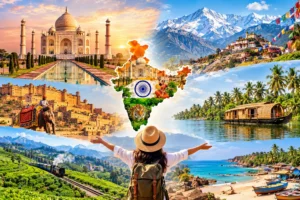
Before the individual places, it helps to see why India rewards travellers so richly.
- Diversity of landscapes: India covers deserts, rainforests, glaciers, coral islands, river deltas, plateaus and one of the world’s longest coastlines. Few countries let you ski in the morning and swim in a warm sea within a couple of days.
- Living heritage: India has dozens of UNESCO World Heritage Sites, including forts, temples, cave complexes, colonial-era railway stations and natural reserves. Many of these are still active places of worship or daily life, not just museums.
- Cuisine: Food in India is regional, not national. A meal in Punjab tastes nothing like a meal in Kerala, and a Bengali thali differs from a Gujarati one. Eating your way across the country is a legitimate reason to travel.
- Festivals: Diwali, Holi, Durga Puja, Onam, Pushkar Camel Fair, Hornbill Festival and many others fill the calendar. If your dates are flexible, planning around one can make a trip unforgettable.
- Range of budgets: India suits backpackers on a tight budget as well as travellers who want palace hotels and private guides. That flexibility is one reason it is among the most visited countries in Asia.
Best Time to Visit India
Timing matters more than almost anything else when visiting the top tourist destinations in India, because the country has several climate zones. A place that is perfect in December can be unbearable in May.
- Winter (October to March): This is the main tourist season for most of the country. The plains of North India, including Delhi, Agra, Jaipur, Varanasi and Udaipur, are pleasant. South India and the coasts, including Goa, Kerala and Tamil Nadu, are comfortable and dry. Expect higher prices and bigger crowds from December to January, so book flights and hotels early.
- Summer (April to June): The plains get very hot, often crossing 40°C. This is the time to escape to hill stations such as Manali, Shimla, Mussoorie, Darjeeling, Munnar and Ooty, or to high-altitude regions such as Ladakh and Spiti, whose roads open by late spring or early summer.
- Monsoon (June to September): Rain transforms the country. The Western Ghats, Kerala, Coorg, Meghalaya and the Valley of Flowers turn intensely green. Beaches and some hill routes can be difficult, and landslides may affect mountain travel. Monsoon is also budget season, with lower hotel rates and fewer tourists. Ayurvedic wellness retreats in Kerala are popular at this time.
- Post-monsoon (September to November): Skies clear and the landscape is fresh. It is an excellent time for Rajasthan, the Himalayas, Kashmir’s autumn colours and festival travel.
A simple rule for choosing the best time to visit India: head to the plains and south from November to February, the mountains from April to June, and the greenery-rich Western Ghats and Northeast during or just after the rains. Always check current weather and road conditions before travelling.
Top Tourist Destinations in India
1. Agra – The Taj Mahal and Mughal Grandeur
No list of famous tourist places in India can begin anywhere else. The Taj Mahal, built in the 17th century by Emperor Shah Jahan in memory of his wife Mumtaz Mahal, is a white marble mausoleum on the bank of the Yamuna River. Photographs cannot fully prepare you for the symmetry, the inlay work, and the way the colour changes from soft pink at dawn to glowing white at midday and golden at sunset.
Agra offers more than the Taj:
- Agra Fort, a red sandstone fortress and UNESCO World Heritage Site, from which you can see the Taj in the distance.
- Mehtab Bagh, a garden across the river with a quiet view of the Taj, ideal for sunset photographs.
- Itmad-ud-Daulah, sometimes called the “Baby Taj,” admired for its delicate marble screens.
- Fatehpur Sikri, an abandoned Mughal capital about an hour away.
Tips: Arrive early to avoid heat and crowds. The Taj is traditionally closed on Fridays, so confirm current rules on the official site. Agra’s street food, particularly petha (a sweet made from ash gourd) and chaat, is worth trying.
Best time: October to March.
2. Jaipur – The Pink City of Rajasthan
Jaipur is the gateway to Rajasthan and part of the famous Golden Triangle circuit along with Delhi and Agra. The walled old city, painted in shades of terracotta pink, is a UNESCO World Heritage Site.
Highlights include:
- Amber Fort, a hilltop palace-fort with mirrored halls and panoramic views.
- City Palace, still partly home to the former royal family.
- Hawa Mahal, the honeycomb “Palace of Winds,” best photographed in morning light.
- Jantar Mantar, an 18th-century astronomical observatory with enormous stone instruments.
- Bazaars selling block-printed textiles, blue pottery, jewellery and leather footwear.
Jaipur is also a strong food destination. Try dal baati churma, laal maas and a glass of lassi in the old city.
Tips: Bargain politely in markets, hire a licensed guide for the forts, and give yourself at least two days.
Best time: October to March.
3. Varanasi – The Spiritual Capital
Varanasi, also called Kashi or Banaras, is among the oldest continuously inhabited cities in the world. It sits on the banks of the Ganges, and life here revolves around the river. Pilgrims come to bathe at the ghats, pray, and perform rituals.
The most memorable experiences are:
- A sunrise boat ride along the ghats, watching morning prayers, yoga and daily life unfold.
- The Ganga Aarti at Dashashwamedh Ghat in the evening, with lamps, chants, bells and fire.
- Walking through the narrow lanes to reach temples, silk shops and tea stalls.
- Visiting nearby Sarnath, where the Buddha delivered his first sermon.
Varanasi can overwhelm first-time visitors with crowds, noise and intensity, but it stays with most travellers long after they leave. Be respectful near cremation ghats and avoid photography where it is prohibited.
Best time: October to March.
4. Delhi – Where Empires Meet
India’s capital is a city of layers. Old Delhi has Mughal monuments, crowded bazaars and famous street food. New Delhi has wide colonial-era avenues, museums and government buildings.
Must-see sites:
- Red Fort, a UNESCO site and the setting of the Independence Day address.
- Jama Masjid, one of the largest mosques in the country.
- Humayun’s Tomb, a forerunner of the Taj Mahal’s architecture.
- Qutub Minar, a soaring 13th-century victory tower.
- India Gate and the Rashtrapati Bhavan area.
- Lotus Temple, known for its flower-like design.
Food is a highlight. Try parathas in Paranthe Wali Gali, kebabs near Jama Masjid, chaat in Chandni Chowk and modern Indian cuisine in Connaught Place and Hauz Khas.
Tips: Use the Delhi Metro to avoid traffic, and be cautious of touts near major stations and monuments.
Best time: October to March.
5. Kerala – God’s Own Country
Kerala is one of the most beautiful states in the country and a leading choice among honeymoon destinations in India. It is known for backwaters, beaches, hills, spice plantations and Ayurveda.
Top experiences:
- Alleppey (Alappuzha) and Kumarakom backwaters: Stay on a traditional houseboat (kettuvallam) drifting through canals lined with coconut palms.
- Munnar: Rolling tea plantations, misty viewpoints and cool weather.
- Thekkady (Periyar): Wildlife and spice gardens.
- Kochi: Chinese fishing nets, colonial architecture, Jewish quarter and art cafes.
- Varkala and Kovalam: Cliff and beach resorts.
- Wayanad: Forests, waterfalls and tribal heritage.
Kerala cuisine, featuring seafood, appam and stew, banana-leaf meals and coconut-rich curries, is a reason to visit by itself.
Best time: September to March, though monsoon is popular for Ayurvedic treatments.
6. Goa – Beaches, Heritage and Nightlife
Goa is India’s smallest state but one of its most visited. Its reputation for beach parties is only part of the story.
North Goa has lively beaches such as Baga, Calangute and Anjuna, with water sports, shacks and nightlife. South Goa is quieter, with beaches like Palolem and Agonda that suit travellers looking for calm.
Beyond the sand:
- Old Goa’s churches, including the Basilica of Bom Jesus, a UNESCO World Heritage Site.
- Fontainhas, the colourful Latin Quarter in Panjim.
- Spice plantations and Portuguese-influenced food, including fish curry rice and vindaloo.
- Flea markets such as Anjuna’s weekly market.
Tips: Rent a scooter only if you have a valid licence and ride carefully. Avoid the peak Christmas and New Year rush if you want quiet.
Best time: November to February.
7. Ladakh – The High-Altitude Desert
Ladakh is a dream for mountain lovers, bikers and photographers. Landscapes here look almost lunar, with barren ridges, deep blue skies, turquoise lakes and Buddhist monasteries perched on cliffs.
Key places:
- Leh, the main hub, with palaces, markets and cafes.
- Nubra Valley, known for sand dunes and double-humped Bactrian camels.
- Pangong Lake, a high-altitude lake whose colour changes through the day.
- Thiksey, Hemis and Diskit monasteries.
- Khardung La, among the highest motorable passes.
Tips: Altitude sickness is real. Spend the first couple of days in Leh acclimatising, drink water, avoid alcohol early on, and do not rush. Some areas require permits, so check current requirements.
Best time: May to September, when roads are typically open.
8. Himachal Pradesh – Manali, Shimla, Dharamshala and Spiti
Himachal is the go-to state for mountain escapes. It offers something for everyone, from families to adventure sports fans.
- Shimla, the former British summer capital, with colonial buildings, the Ridge and the Kalka-Shimla toy train, a UNESCO site.
- Manali, for snow, paragliding, river rafting and gateway routes to Lahaul and Spiti.
- Dharamshala and McLeod Ganj, home to the Tibetan community and Dalai Lama’s residence, with cafes and trekking routes.
- Kasol and Parvati Valley, popular with backpackers.
- Spiti Valley, a remote, stark mountain desert with ancient monasteries like Key and Tabo.
Best time: March to June for pleasant weather; December to February for snow.
9. Rishikesh and Haridwar – Yoga, Adventure and Faith
Set where the Ganges leaves the Himalayan foothills, these twin towns combine spirituality and adventure.
Rishikesh is known as the yoga capital of the world. Besides ashrams and meditation retreats, it offers white-water rafting, bungee jumping, cliff camping and trekking. The Lakshman Jhula and Ram Jhula bridges, riverside cafes, and the evening Ganga Aarti at Triveni Ghat are popular.
Haridwar, a short distance away, is one of the seven holiest cities in Hinduism, famous for the Har Ki Pauri ghat and the evening Ganga Aarti.
Tips: Rafting is seasonal and usually closed during the monsoon. Rishikesh is largely vegetarian and alcohol-free, which many visitors find part of its charm.
Best time: September to November and February to May.
10. Kashmir – Paradise in the Himalayas
Kashmir has long been celebrated for its lakes, gardens and mountains. Srinagar offers shikara rides on Dal Lake, houseboat stays, Mughal gardens like Shalimar Bagh and Nishat Bagh, and old-city markets selling shawls, saffron and walnut wood carvings.
Beyond Srinagar:
- Gulmarg, a well-known ski destination with a high-altitude gondola.
- Pahalgam, a valley of meadows and river views.
- Sonamarg, the “meadow of gold,” a base for glacier trails.
Kashmiri cuisine, including wazwan, kahwa (saffron tea) and noon chai, is a highlight.
Tips: Check current travel advisories and local conditions before planning. Conditions can change, and up-to-date government guidance is essential.
Best time: April to October for greenery; December to February for snow; autumn for colour.
11. Darjeeling and Sikkim – Tea Gardens and Kanchenjunga Views
In West Bengal’s hills, Darjeeling is known for its tea estates, the Darjeeling Himalayan Railway (a UNESCO site) and sunrise views from Tiger Hill. On a clear morning, Kanchenjunga, the third-highest mountain in the world, glows in the distance.
Sikkim is nearby and offers monasteries, pristine mountains, and one of the cleanest and best-managed tourism environments in the country. Highlights include Gangtok, Tsomgo (Changu) Lake, Nathula Pass (permits required), Yumthang Valley, and Pelling with views of Kanchenjunga.
Tips: Book permits in advance for restricted areas. Try momos, thukpa and local butter tea.
Best time: March to May and October to December.
12. Meghalaya and the Northeast – India’s Hidden Gem
The Northeast is one of the least crowded and most rewarding regions in the country. Meghalaya, “the abode of clouds,” is famous for living root bridges, waterfalls and crystal-clear rivers.
Top spots:
- Cherrapunji and Mawsynram, among the wettest places on Earth.
- Dawki and Umngot River, whose water looks transparent.
- Double Decker Living Root Bridge, near Nongriat, reached by a trek.
- Mawlynnong, often called one of Asia’s cleanest villages.
- Shillong, with its cafes, music culture and lakes.
Also consider Kaziranga National Park in Assam, famed for the one-horned rhinoceros, and Tawang in Arunachal Pradesh, home to a large Buddhist monastery.
Tips: Some states require permits for domestic or foreign visitors, so check in advance. Travel times are longer than they appear on maps.
Best time: October to April.
13. Andaman and Nicobar Islands – Tropical Islands
If you dream of white sand, clear water and coral reefs, the Andamans deliver.
- Havelock (Swaraj Dweep): Radhanagar Beach is regularly ranked among Asia’s best beaches. Scuba diving and snorkelling are major draws.
- Neil Island (Shaheed Dweep): Quiet and relaxed, with natural rock bridges.
- Port Blair: The Cellular Jail, a national memorial to India’s freedom struggle, and its evening light and sound show.
- Ross Island and Baratang: Colonial ruins, limestone caves and mangrove creeks.
Tips: Book ferries and accommodation early during peak season. Carry cash, as connectivity and ATMs can be limited.
Best time: October to May.
14. Hampi – Ruins of an Empire
Hampi, in Karnataka, was once the capital of the mighty Vijayanagara Empire. Today it is a UNESCO World Heritage Site where huge boulders, banana fields and ancient stone temples create a surreal landscape.
Don’t miss:
- Virupaksha Temple, still active after many centuries.
- Vittala Temple, home to the famous stone chariot.
- Hampi Bazaar, Lotus Mahal, and Elephant Stables.
- Matanga Hill at sunrise.
- Across the river, Anegundi, a quieter area popular with climbers and cyclists.
Rent a bicycle or scooter to explore, and allow at least two days.
Best time: October to February.
15. Mumbai – The City That Never Sleeps
Mumbai is India’s financial and entertainment capital, and a city of striking contrasts.
Highlights:
- Gateway of India and the Taj Mahal Palace Hotel on the waterfront.
- Chhatrapati Shivaji Maharaj Terminus, a UNESCO-listed railway station.
- Marine Drive at sunset.
- Elephanta Caves, reached by ferry from the Gateway.
- Dharavi and street-food trails, vada pav, pav bhaji and bhel puri.
- Bollywood studio experiences.
Tips: Local trains are efficient but crowded during rush hours. Monsoon can cause waterlogging in parts of the city.
Best time: November to February.
16. Amritsar – The Golden Temple and Punjabi Hospitality
The Golden Temple (Harmandir Sahib) is the holiest shrine of Sikhism and a striking sight, its gold-covered sanctum reflected in a sacred pool. Visitors of all faiths are welcome. Cover your head, remove your shoes, and experience the community kitchen (langar), which serves free meals to tens of thousands of people every day.
Also see:
- Jallianwala Bagh, a memorial to the 1919 massacre.
- Wagah Border ceremony, a spirited flag-lowering ritual shared with Pakistan.
- Amritsari kulcha, lassi and street food.
Best time: October to March.
17. Udaipur – The City of Lakes
Often called the most romantic city in India, Udaipur is built around lakes and framed by the Aravalli Hills.
- City Palace, overlooking Lake Pichola.
- Lake Pichola boat ride, with views of Jag Mandir and the Lake Palace.
- Jagdish Temple, Saheliyon Ki Bari and Sajjangarh (Monsoon) Palace.
- Rooftop restaurants for sunset dinners.
It is a popular wedding and honeymoon choice, and a good base for visiting the nearby Kumbhalgarh Fort and Ranakpur Jain temples.
Best time: October to March.
18. Jaisalmer – The Golden City of the Thar Desert
Jaisalmer’s sandstone fort glows gold in the sun, and unlike most forts it is still a living city, with homes, shops and hotels inside its walls.
- Jaisalmer Fort and the ornate havelis such as Patwon Ki Haveli.
- Sam Sand Dunes, for camel safaris, desert camps and folk music under the stars.
- Kuldhara, an abandoned village steeped in legend.
- Gadisar Lake.
Tips: Pick reputable desert camps and be mindful of sustainability. Winter nights can be cold.
Best time: November to February.
19. Madurai and Tamil Nadu’s Temple Circuit
Tamil Nadu has some of the finest Dravidian temple architecture in the world.
- Meenakshi Amman Temple, Madurai, with towering gateways (gopurams) covered in thousands of painted sculptures.
- Brihadeeswarar Temple, Thanjavur, a UNESCO site built over a thousand years ago.
- Ramanathaswamy Temple, Rameswaram, famed for its long pillared corridors.
- Mahabalipuram, with shore temples and rock-cut monuments on the coast.
- Kanyakumari, where the Bay of Bengal, Arabian Sea and Indian Ocean meet.
Add Chennai’s heritage sites and filter coffee for a rich cultural trip.
Best time: November to February.
20. Khajuraho and Central India
Madhya Pradesh, at the heart of the country, offers heritage and wildlife.
- Khajuraho Group of Monuments, UNESCO-listed temples known for intricate sculptures.
- Sanchi Stupa, a major Buddhist site.
- Bhimbetka rock shelters, with prehistoric paintings.
- Orchha, a quiet town of palaces and temples on the Betwa River.
- Kanha, Bandhavgarh and Pench National Parks, well known for tiger safaris.
Best time: October to March; tiger reserves usually have closed periods, so check.
21. Ajanta and Ellora Caves – Rock-Cut Wonders
Near Aurangabad (Chhatrapati Sambhajinagar) in Maharashtra, these caves are among the finest examples of ancient Indian rock-cut architecture.
- Ajanta: Buddhist caves with beautiful paintings and sculptures.
- Ellora: Buddhist, Hindu and Jain caves, including the astonishing Kailasa Temple, carved from a single rock.
Both are UNESCO sites and are best visited in winter, with an early start.
22. Ranthambore, Jim Corbett and Other Wildlife Escapes
India is one of the best countries in the world to see tigers in the wild.
- Ranthambore (Rajasthan): Tigers roaming among ruins of an old fort.
- Jim Corbett (Uttarakhand): India’s oldest national park, rich in wildlife and river scenery.
- Kaziranga (Assam): Rhinoceros, elephants and birdlife.
- Gir (Gujarat): The only wild home of Asiatic lions.
- Sundarbans (West Bengal): Mangrove forest, home to the Bengal tiger.
Safaris are regulated and zones are limited, so book through official portals or licensed operators well in advance.
23. Rann of Kutch – A White Desert
In Gujarat, the Great Rann of Kutch turns into a vast, glittering white salt desert. The Rann Utsav, held in winter, includes cultural performances, handicrafts and tent stays. Full-moon nights are especially magical. Combine with visits to Bhuj, Dholavira (a UNESCO-listed Indus Valley site) and local craft villages.
Best time: November to February.
24. Ooty, Coorg and the Western Ghats
South India’s hill stations are lush and gentle.
- Ooty and Coonoor (Tamil Nadu), with tea gardens and the Nilgiri Mountain Railway, a UNESCO site.
- Coorg (Kodagu), coffee estates, waterfalls and Kodava cuisine.
- Chikmagalur, coffee country and trekking trails.
- Kodaikanal, a lake town with cool weather.
These are perfect for slow, restful trips, and particularly green after the monsoon.
25. Puri, Konark and Odisha
Odisha remains underrated. Puri is home to the Jagannath Temple and its famous Rath Yatra festival. Konark Sun Temple, a UNESCO site, is designed as a giant stone chariot. Bhubaneswar has hundreds of temples, and Chilika Lake offers birdwatching and dolphin sightings.
Best time: October to March.
Sample Itineraries for Tourist Places in India
The Golden Triangle (5 to 7 days): Delhi → Agra → Jaipur. Ideal for first-time visitors who want history, monuments and food. Add Ranthambore for a tiger safari.
- Royal Rajasthan (10 to 12 days): Jaipur → Jodhpur → Jaisalmer → Udaipur → Pushkar. Forts, palaces, desert camps and lakes.
- South India Classic (10 to 14 days): Chennai → Mahabalipuram → Madurai → Munnar → Alleppey → Kochi. Temples, hills and backwaters.
- Himalayan Adventure (10 to 14 days): Delhi → Manali → Leh → Nubra → Pangong → Leh. Allow time for acclimatisation and check the season.
- Spiritual India (7 to 10 days): Delhi → Amritsar → Haridwar → Rishikesh → Varanasi. A mix of Sikh, Hindu and Buddhist heritage.
- Beach and Culture (7 days): Mumbai → Goa → Hampi, or Chennai → Andaman Islands.
- Northeast Explorer (8 to 10 days): Guwahati → Shillong → Cherrapunji → Dawki → Kaziranga.
Distances in India can be larger and travel slower than expected, so avoid packing too many places into a short trip.
Budget Travel in India
One of India’s biggest advantages is flexibility on cost. Budget travel in India is genuinely possible without sacrificing experiences.
- Accommodation: Options range from hostels and homestays to mid-range hotels and heritage palaces. Homestays often give the best value and local hospitality.
- Transport: Trains are the classic Indian travel experience and are affordable, but popular routes fill quickly, so book through the official railway platform well in advance. Overnight trains save on a hotel night. Domestic flights can be cheap when booked early. State buses cover hills and rural areas.
- Food: Eating at local restaurants, dhabas and thali places is delicious and inexpensive. Choose busy places with high turnover.
- Sightseeing: Many monuments have lower ticket rates for Indian nationals than foreign visitors. Some sites offer combined or online tickets, and many temples are free.
Saving tips:
- Travel in shoulder season (just before or after peak months).
- Book trains and flights early.
- Stay slightly outside tourist centres.
- Use metro and local transport in cities.
- Compare prices across booking platforms and check cancellation policies.
India Travel Tips for First-Time Visitors
These India travel tips help you avoid common problems.
- Documents: International visitors should check current visa options, including e-visa eligibility, on the official government portal. Carry copies of your passport and visa. Note that permits are required in certain regions.
- Health: Consult a doctor or travel clinic about vaccinations. Carry basic medicines, rehydration salts and hand sanitiser. Drink bottled or filtered water.
- Food safety: Start gradually with spicy food. Choose freshly cooked meals and avoid raw salads or unpeeled cut fruit if your stomach is sensitive.
- Money: Digital payments through UPI are widespread, but foreign visitors may find cards and cash more practical. Keep small notes for tips, autos and small shops.
- Connectivity: Local SIM cards or eSIMs are easy to arrange, but rules may require identity verification. Download offline maps.
- Dress modestly: Especially at temples, mosques and gurdwaras. Carry a scarf or shawl and easily removable footwear.
- Bargaining: Common in markets. Stay polite, and know approximate prices beforehand.
- Transport apps: Ride-hailing apps and prepaid taxis reduce the risk of overcharging.
- Safety: India is welcoming to most visitors, but exercise normal caution. Avoid isolated areas late at night, keep valuables secure, use registered guides, and share your itinerary with someone. Solo and women travellers should research areas, choose reputable stays and trust their instincts.
- Weather and roads: Check forecasts, especially in the mountains and during monsoon.
- Travel insurance: Strongly recommended, particularly for trekking, adventure sports and high-altitude regions.
- Patience and flexibility: Delays happen. Build buffer time into your plans.
Responsible and Sustainable Travel
With so many people visiting popular tourist places in India, responsible travel matters more than ever.
- Reduce plastic: Carry a refillable bottle and cloth bag.
- Respect local culture: Ask before photographing people, and follow rules at religious sites.
- Support local businesses: Stay in homestays, buy directly from artisans and eat local food.
- Protect nature: Stay on marked trails, don’t litter in the mountains, and never feed wildlife.
- Choose ethical wildlife experiences: Avoid attractions that exploit animals.
- Conserve resources: Water and electricity are scarce in some regions.
Small choices add up, and they help ensure these places remain beautiful for future travellers.
Frequently Asked Questions (FAQs)
1. What are the most famous tourist places in India?
The Taj Mahal (Agra), Jaipur, Delhi, Varanasi, Kerala backwaters, Goa, Ladakh, Rishikesh and the Golden Temple in Amritsar are among the most visited.
2. What is the best time to visit India?
For most regions, October to March is the best time. Hill stations and high-altitude areas are ideal from April to June, while the Western Ghats and Northeast look their best during and after the monsoon.
3. How many days do I need to see India?
Two weeks lets you cover one or two regions comfortably, such as the Golden Triangle plus Rajasthan, or Kerala plus Tamil Nadu. A month or more allows a broader trip. Trying to see the whole country in one visit is not recommended.
4. Which are the best honeymoon destinations in India?
Kerala, Udaipur, Andaman Islands, Kashmir, Manali, Goa, Darjeeling and Sikkim are popular choices.
5. Is India safe for tourists?
Millions of people travel across India safely each year. Take standard precautions, research your destinations, use trusted services and check official advisories.
6. Which is the best place in India for budget travel?
Rishikesh, Hampi, Pushkar, Varanasi, Himachal’s villages, parts of the Northeast and many South Indian towns are known for good value.
7. What are the best UNESCO World Heritage Sites in India?
Top choices include the Taj Mahal, Agra Fort, Red Fort, Hampi, Khajuraho, Ajanta and Ellora Caves, Konark Sun Temple, Jaipur’s Jantar Mantar and the mountain railways of Darjeeling, Shimla and the Nilgiris.
8. Which is the best place for snow in India?
Gulmarg, Manali, Auli, Shimla, Spiti, Sikkim and parts of Uttarakhand are popular in winter.
9. Which destinations are best for wildlife?
Ranthambore, Jim Corbett, Kaziranga, Bandhavgarh, Kanha, Gir and Sundarbans.
10. How do I travel between cities in India?
By train, domestic flights, buses or hired cars. Trains suit mid-distance routes and give a cultural experience. Flights save time on longer routes.
Conclusion
India is not just a destination but a series of journeys. The best tourist places in India range from monuments that changed history to mountain passes that test your limits, from calm backwaters to intense, energetic cities. Whether you choose the Taj Mahal at sunrise, a houseboat in Kerala, a monastery in Ladakh or a plate of street food in Delhi, each place shows a different side of the country.
Use this India travel guide as a starting point. Pick a region, check the season, travel slowly, and leave room for surprises. Some of your best memories will come from unplanned moments: a conversation with a local tea seller, a festival you stumbled upon, a sunrise you didn’t expect.
Which of these top tourist destinations in India will you visit first? Share your questions and experiences in the comments, and subscribe for more destination guides and travel tips.