
Introduction: Why Vietnam Should Be on Your Travel List
Vietnam has quietly become one of Southeast Asia’s most talked-about destinations, and for good reason. This long, S-shaped country stretches from the misty mountains of the north to the sun-soaked river deltas of the south, packing an extraordinary range of landscapes, cultures, and experiences into one trip. Whether you’re drawn to the limestone islands of Ha Long Bay, the lantern-lit streets of Hoi An, the street-food chaos of Hanoi, or the beach resorts of Phu Quoc, Vietnam tourist places offer something for every kind of traveler.
This guide covers the best places to visit in Vietnam in 2026, along with practical travel tips, the best time to visit, food recommendations, and answers to common questions travelers ask before booking a trip. Whether you’re planning a two-week backpacking adventure or a relaxed family holiday, this article will help you build an itinerary that actually works.
1. Ha Long Bay — Vietnam’s Natural Wonder
No list of Vietnam tourist places is complete without Ha Long Bay. This UNESCO World Heritage Site in northern Vietnam is famous for its emerald-green waters dotted with thousands of towering limestone karsts and islets, many topped with dense tropical greenery. Cruising through the bay, especially at sunrise when mist rolls across the water, feels almost cinematic.
Top things to do in Ha Long Bay:
- Book an overnight cruise on a traditional junk boat to watch the sunset and sunrise over the karsts.
- Explore Sung Sot Cave (Surprise Cave), one of the largest and most dramatic caves in the bay.
- Kayak through hidden lagoons and past floating fishing villages.
- Visit Lan Ha Bay for the same scenery with noticeably fewer crowds.
- Try your hand at pearl farming demonstrations on Ti Top Island.
Best time to visit: March to May and September to November, when the weather is mild and skies are clearer.
Traveler tip: Choose a mid-range or boutique cruise over the cheapest option — quality varies enormously, and a slightly higher budget dramatically improves the food, cabins, and overall experience.
2. Hanoi — Vietnam’s Historic and Cultural Capital
Hanoi, Vietnam’s capital, is a city where the past and present sit side by side. The Old Quarter’s 36 ancient streets are packed with motorbikes, street vendors, and centuries-old shophouses, while French colonial buildings and modern skyscrapers frame the skyline just beyond.
Top attractions in Hanoi:
- Hoan Kiem Lake: Take a morning walk around this peaceful lake in the heart of the city, where locals practice tai chi at sunrise.
- Old Quarter: Wander the maze-like streets, each historically named after the trade once sold there (Silk Street, Silver Street, and so on).
- Temple of Literature: Vietnam’s first national university, dedicated to Confucius, and a beautiful example of traditional architecture.
- Water Puppet Show: A uniquely Vietnamese art form dating back nearly a thousand years, performed on water with a live traditional orchestra.
- Train Street: A narrow residential street where a working railway line runs just inches from cafes and homes.
Food scene: Hanoi is considered the birthplace of pho, and street-food tours through the Old Quarter are one of the best ways to experience local life.
3. Ho Chi Minh City (Saigon) — Vietnam’s Dynamic Metropolis
Formerly known as Saigon, Ho Chi Minh City is Vietnam’s largest city and its commercial engine. It’s a fascinating contrast of modern skyscrapers, French colonial landmarks, and a fast-paced street culture that never seems to slow down.
Top attractions in Ho Chi Minh City:
- War Remnants Museum: A powerful, sobering look at the Vietnam War. Some exhibits are graphic, but it offers essential historical context for understanding modern Vietnam.
- Notre Dame Cathedral of Saigon and the Central Post Office: Two of the city’s most photographed French colonial buildings.
- Ben Thanh Market: A bustling indoor market for souvenirs, clothing, and street food.
- Cu Chi Tunnels: An extensive underground tunnel network used during the war, located just outside the city and open for guided tours.
- Bui Vien Street: The city’s backpacker and nightlife hub, full of bars, live music, and street food stalls.
Traveler tip: Ho Chi Minh City’s traffic is intense. Use ride-hailing apps like Grab rather than trying to cross busy intersections or hail traditional taxis.
4. Hoi An Ancient Town — A Lantern-Lit Cultural Gem
Hoi An is one of the most charming Vietnam tourist places, known for its beautifully preserved ancient architecture and glowing paper lanterns that light up the old town every evening. Once a major trading port, Hoi An’s streets reflect a blend of Vietnamese, Chinese, Japanese, and French influences.
Top things to do in Hoi An:
- Walk across the iconic Japanese Covered Bridge, a 400-year-old landmark.
- Take a lantern-making workshop with a local artisan.
- Get custom clothing tailor-made — Hoi An is famous for affordable, high-quality tailoring completed within 24-48 hours.
- Visit the night market along the Thu Bon River for street food and handicrafts.
- Take a basket-boat ride through the coconut palm forests of Cam Thanh village.
Dining highlight: Don’t leave without trying cao lau, a regional noodle dish unique to Hoi An, made with water sourced from a specific local well.
5. Hue — The Imperial City
Hue served as Vietnam’s imperial capital under the Nguyen Dynasty, and its royal history is still visible throughout the city. History lovers consistently rank it among the top Vietnam tourist places for its blend of architecture, royal tombs, and riverside scenery.
Top attractions in Hue:
- The Imperial City (Hue Citadel): A vast walled complex modeled on Beijing’s Forbidden City, home to palaces, temples, and royal gardens.
- Royal Tombs: The tombs of emperors like Tu Duc and Khai Dinh are architectural masterpieces set in peaceful, landscaped grounds.
- Thien Mu Pagoda: A seven-story pagoda overlooking the Perfume River, considered one of the most iconic religious sites in Vietnam.
- Perfume River Cruise: A relaxing boat trip that passes many of the city’s temples and tombs.
Food specialty: Hue is known for its refined imperial cuisine, including bun bo Hue, a spicy beef noodle soup distinct from its Hanoi counterpart.
6. Sapa — Mountain Trekking and Hill Tribe Culture
Tucked into the northwest mountains near the Chinese border, Sapa is Vietnam’s premier trekking destination. Terraced rice fields cascade down the hillsides, and the town is home to several ethnic minority communities, including the Hmong and Dao people.
Top things to do in Sapa:
- Trek through the rice terraces of Muong Hoa Valley, especially stunning during the June-September growing season.
- Hike to the summit of Fansipan, the tallest mountain in Indochina, either on foot or via cable car.
- Visit local villages like Cat Cat and Ta Van to learn about hill tribe traditions and textiles.
- Explore the Sapa weekend market for handmade crafts and local produce.
Best time to visit: September to November for golden rice harvest season, or March to May for blooming flowers and milder trekking conditions.
7. Ninh Binh — “Ha Long Bay on Land”
Often nicknamed the inland version of Ha Long Bay, Ninh Binh features the same dramatic limestone karsts, but rising out of rice paddies and rivers rather than the sea. It’s an easy day trip from Hanoi and increasingly popular among travelers looking for a quieter alternative to the coast.
Top attractions in Ninh Binh:
- Trang An Grottoes: Take a rowboat through a network of caves and rivers surrounded by limestone peaks — a UNESCO World Heritage Site.
- Tam Coc: Similar boat experience along the Ngo Dong River, especially beautiful during rice harvest season.
- Mua Cave: Climb roughly 500 steps to a viewpoint overlooking the entire valley — one of the best panoramic photo spots in northern Vietnam.
- Hoa Lu Ancient Capital: The former capital of Vietnam in the 10th and 11th centuries, with well-preserved temples.
8. Da Nang — Beaches Meet Modern Vietnam
Da Nang has transformed from a mid-sized coastal city into one of Vietnam’s most popular beach destinations, thanks to its long stretch of sand, modern infrastructure, and proximity to Hoi An and Hue.
Top attractions in Da Nang:
- My Khe Beach: Consistently rated among Asia’s best beaches, with soft sand and calm waters.
- Marble Mountains: Five limestone hills with hidden caves, pagodas, and panoramic viewpoints.
- Ba Na Hills and the Golden Bridge: Home to the famous bridge held up by giant stone “hands,” plus a French-village-themed amusement park at the summit.
- Dragon Bridge: A city landmark that breathes fire and water on weekend evenings.
9. Phu Quoc Island — Vietnam’s Tropical Paradise
Phu Quoc, located in the Gulf of Thailand, is Vietnam’s largest island and its top beach resort destination. With white-sand beaches, clear water, and a growing number of luxury resorts, it’s often compared to destinations like Phuket or Bali.
Top things to do in Phu Quoc:
- Relax on Sao Beach or Long Beach, two of the island’s most popular stretches of sand.
- Ride the Hon Thom Cable Car, one of the longest three-rope cable cars in the world.
- Snorkel or dive around the An Thoi Archipelago’s coral reefs.
- Visit a local fish sauce factory to learn about the island’s centuries-old production tradition.
- Explore Phu Quoc National Park for jungle trekking and waterfalls.
Best time to visit: November to March, during the dry season.
10. Nha Trang — Coastal City and Diving Hub
Nha Trang is one of Vietnam’s most established beach cities, known for its long coastline, warm turquoise water, and vibrant nightlife scene.
Top attractions in Nha Trang:
- Nha Trang Beach: A 6-kilometer stretch along the city center, popular for swimming and water sports.
- Vinpearl Land: An amusement park and cable car ride located on Hon Tre Island.
- Po Nagar Cham Towers: Ancient Hindu temple towers dating back to the 7th century.
- Hon Mun Island: One of the best diving and snorkeling spots in Vietnam, part of a designated marine protected area.
11. Mekong Delta — Vietnam’s River Life
South of Ho Chi Minh City, the Mekong Delta is a maze of rivers, canals, floating markets, and lush orchards. It offers a completely different side of Vietnam — slower-paced, rural, and deeply connected to the water.
Top things to do in the Mekong Delta:
- Visit the Cai Rang Floating Market near Can Tho, where vendors sell produce directly from boats.
- Take a sampan (small wooden boat) ride through narrow canals lined with coconut palms.
- Sample tropical fruit and local honey at a riverside orchard.
- Explore local villages to see traditional rice paper and coconut candy production.
12. Phong Nha-Ke Bang National Park — Cave Country
This UNESCO-listed national park in central Vietnam is home to some of the largest and most spectacular cave systems on Earth, including Son Doong, widely recognized as the largest cave in the world.
Top attractions in Phong Nha:
- Son Doong Cave: Requires a permitted multi-day expedition, but it’s a bucket-list experience for serious adventurers, featuring its own underground jungle and weather system.
- Paradise Cave: A more accessible cave with stunning limestone formations, suitable for casual visitors.
- Phong Nha Cave: Explore by boat along an underground river.
- Dark Cave: Combines caving with mud baths and zip-lining for a more adventurous day trip.
13. Ha Giang — Vietnam’s Wild North
For travelers seeking a true off-the-beaten-path experience, Ha Giang delivers dramatic mountain scenery, winding roads, and some of the least-visited ethnic minority villages in the country.
Top things to do in Ha Giang:
- Ride the Ha Giang Loop, a multi-day motorbike route through some of Vietnam’s most jaw-dropping mountain passes.
- Visit the Dong Van Karst Plateau, a UNESCO Global Geopark.
- See the Ma Pi Leng Pass, often called one of the most spectacular roads in Vietnam.
- Explore local markets in villages rarely visited by mass tourism.
Best time to visit: October to December for buckwheat flower season, or September to November for rice harvest.
14. Da Lat — The City of Eternal Spring
Located in Vietnam’s Central Highlands, Da Lat offers a cooler climate, French colonial architecture, and a landscape of pine forests, lakes, and flower farms — a refreshing contrast to Vietnam’s tropical lowlands.
Top attractions in Da Lat:
- Xuan Huong Lake: The scenic centerpiece of the city, popular for walking and cycling.
- Crazy House: A surreal, tree-inspired guesthouse and architectural attraction unlike anything else in Vietnam.
- Datanla Waterfall: Accessible via a fun alpine coaster ride through the forest.
- Local Flower and Coffee Farms: Da Lat is one of Vietnam’s main coffee-growing regions, and farm tours are widely available.
15. Con Dao Islands — Vietnam’s Hidden Gem
Once a remote prison colony, Con Dao has become one of Vietnam’s best-kept secrets — an archipelago known for pristine beaches, sea turtle nesting sites, and a laid-back atmosphere far removed from Vietnam’s more crowded tourist places.
Top things to do in Con Dao:
- Relax on Dam Trau Beach, considered one of the most beautiful and least crowded beaches in Vietnam.
- Snorkel or dive around the surrounding coral reefs.
- Visit between May and October to see sea turtles nesting on protected beaches.
- Learn about the island’s history at the former Con Dao Prison, a significant historical site.
Best Time to Visit Vietnam
Vietnam’s long, narrow shape means it spans three distinct climate zones, so timing depends heavily on which region you’re visiting.
- Northern Vietnam (Hanoi, Sapa, Ha Long Bay, Ninh Binh): Best visited from September to November or March to May, when temperatures are mild and rainfall is lower.
- Central Vietnam (Hue, Da Nang, Hoi An): February to May offers the most reliable dry, warm weather before the summer heat and autumn storm season.
- Southern Vietnam (Ho Chi Minh City, Mekong Delta, Phu Quoc): Dry season runs from December to April, making it the most comfortable time to visit.
If your itinerary spans multiple regions, February to April is generally considered the best overall window to explore most of Vietnam’s tourist places without major weather disruptions.
Vietnam Travel Tips for First-Time Visitors
- Visa requirements: Many nationalities are eligible for e-visas or visa-free entry for short stays — check current requirements before booking, as policies are frequently updated.
- Currency: The Vietnamese dong (VND) is the local currency. Cash is still widely used, especially outside major cities, though card payments and e-wallets are increasingly common in tourist areas.
- Transportation: Domestic flights are affordable and efficient for covering long distances (e.g., Hanoi to Ho Chi Minh City). Trains and overnight buses are budget-friendly options for shorter regional hops.
- SIM cards: Local SIM cards or eSIMs are inexpensive and widely available at airports, making it easy to stay connected for navigation and ride-hailing apps.
- Packing: Pack light, breathable clothing for the south and center, and bring warmer layers if traveling to the mountainous north between November and March.
- Bargaining: Light bargaining is common and expected at markets, though fixed-price stores and restaurants do not require it.
Vietnamese Food You Must Try
No trip to Vietnam is complete without diving into its food culture, which varies significantly by region.
- Pho: Vietnam’s iconic beef or chicken noodle soup, best enjoyed in Hanoi.
- Banh Mi: A crispy baguette sandwich filled with meats, pickled vegetables, and herbs.
- Bun Cha: Grilled pork served with rice noodles and a tangy dipping sauce, a Hanoi specialty.
- Cao Lau: A regional noodle dish unique to Hoi An.
- Bun Bo Hue: A spicy beef noodle soup native to Hue’s royal cuisine.
- Fresh Spring Rolls (Goi Cuon): Light, rice-paper-wrapped rolls filled with shrimp, herbs, and vermicelli.
- Vietnamese Coffee: Strong drip coffee, often served with sweetened condensed milk, especially popular in Da Lat’s coffee-growing region.
Sample 14-Day Vietnam Itinerary
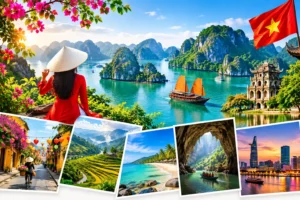
For travelers wanting to combine several of the best Vietnam tourist places into one trip, here’s a general framework:
- Days 1–3: Hanoi (city exploration, Old Quarter, Temple of Literature)
- Days 4–5: Ha Long Bay or Ninh Binh (overnight cruise or day trip)
- Days 6–7: Sapa (trekking and hill tribe villages)
- Days 8–9: Hue (imperial history and royal tombs)
- Days 10–11: Hoi An and Da Nang (ancient town, beaches, Ba Na Hills)
- Days 12–14: Ho Chi Minh City and the Mekong Delta (city sights and river life)
This route can be adjusted to add Phu Quoc or Nha Trang for beach time, or Phong Nha for cave exploration, depending on how much time you have.
Frequently Asked Questions About Vietnam Tourist Places
What is the most popular tourist place in Vietnam?
Ha Long Bay is generally considered Vietnam’s most iconic tourist destination, thanks to its UNESCO-listed limestone karst scenery.
How many days do you need to see the best of Vietnam?
Most travelers spend 10 to 14 days to comfortably cover the major regions — north, central, and south — without feeling rushed.
Is Vietnam a budget-friendly destination?
Yes. Vietnam remains one of the most affordable countries in Southeast Asia for accommodation, food, and transportation, making it accessible for a wide range of travel budgets.
What is the best time of year to visit Vietnam?
February to April is generally the best window for visiting most regions, though the ideal time varies by area due to Vietnam’s diverse climate zones.
Is Vietnam safe for tourists?
Vietnam is generally considered a safe destination for travelers, with low rates of violent crime, though standard precautions against petty theft and traffic safety are recommended.
Conclusion
From the limestone cliffs of Ha Long Bay to the lantern-lit streets of Hoi An and the beach resorts of Phu Quoc, Vietnam tourist places offer an extraordinary range of experiences packed into one country. Whether you’re trekking through the rice terraces of Sapa, exploring imperial history in Hue, or relaxing on the sands of Con Dao, Vietnam rewards travelers willing to explore beyond the obvious highlights. With careful planning around the best time to visit and a realistic itinerary, this Southeast Asian gem is well worth the trip in 2026 and beyond.