
Bangalore — officially Bengaluru, and still called “Bangalore” by almost everyone who has ever visited — is one of India’s most rewarding cities to explore. It is a place where centuries-old temples sit a short auto-rickshaw ride from glass-fronted tech parks, where a lake-side morning walk is followed by a craft-beer evening, and where the weather stays kinder than almost anywhere else in the country. Whether you’re arriving for business, a long weekend, or a proper two-week trip through South India, having a clear set of Bangalore travel guidelines before you land will save you time, money, and a fair amount of frustration in the city’s famous traffic.
This guide walks through everything a visitor actually needs: when to go, how to get around, where to stay, what to eat, what to see, how to stay safe, and the small cultural details that make a trip smoother. It’s written to be read start to finish before your trip, or dipped into section by section as you plan.
1. Why Bangalore Deserves a Spot on Your Itinerary
Bangalore is often introduced as India’s “Silicon Valley,” and that reputation is well earned — the city is home to a huge share of the country’s technology and startup economy. But reducing Bangalore to its tech industry misses most of what makes it worth visiting. This is a city with genuine historical depth: the Vijayanagara Empire, the Wodeyar dynasty, Hyder Ali, Tipu Sultan, and later the British Raj all left their mark, and much of that history is still visible in the city’s forts, palaces, and old temples if you know where to look.
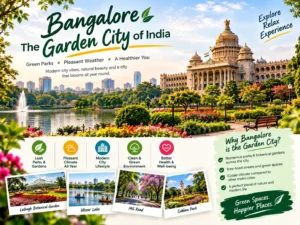
Bangalore is also called the “Garden City” of India for good reason. Between Lalbagh Botanical Garden, Cubbon Park, and dozens of smaller green pockets scattered through residential neighborhoods, it’s one of the greenest metros in the country. Add in a climate that rarely gets punishingly hot, a genuinely diverse food scene shaped by decades of migration from every Indian state, and a nightlife and café culture that rivals any major Indian city, and you have a destination that rewards a few unhurried days rather than a rushed 24-hour stopover.
2. Best Time to Visit Bangalore
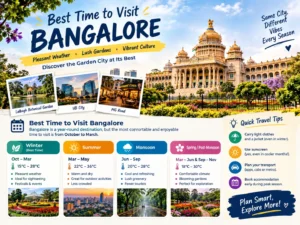
Getting the timing right is probably the single most important of all the Bangalore travel guidelines in this article, because it shapes everything else — what you pack, what you can realistically do outdoors, and how much you’ll pay for a hotel room.
October to February: The Peak Season
October to February is widely considered the ideal window to visit, with October standing out as the best month because the monsoon has just ended and the city turns lush green, with temperatures remaining comfortable between roughly 20 and 28 degrees Celsius. This is peak tourist season, and for good reason: mornings are crisp, skies are generally clear, and outdoor sightseeing at places like Lalbagh, Cubbon Park, and Bangalore Palace is genuinely pleasant rather than something to be endured.
This cool, dry stretch also lines up with several cultural events — depending on the year, the period can include Dasara, Diwali, Christmas, the BLR Hubba festival, and the Bangalore Literature Festival, which in 2026 is scheduled for December 11–13. Winter also brings the Bengaluru Tech Summit, generally held in November, along with the Bengaluru International Film Festival, so it’s worth checking event calendars before you book if any of these interest you.
December through February is Bangalore’s coolest and driest stretch, with December averaging a daily high around 26.9°C and January around 28.4°C, warming to roughly 30.9°C by February, while nights typically sit around 16–18°C. Pack a light sweater or jacket for early mornings and evenings during these months — it genuinely gets cool enough to notice, especially if you’re used to tropical heat.
The trade-off of visiting in peak season is cost and crowds. Tourist numbers rise, hotel prices creep up, and occasional morning fog can even delay flights. If you’re planning a December or January trip, especially around New Year, book accommodation well ahead.
March to May: Summer, But a Mild One
Bangalore’s summer, from March to May, tops out around 32 to 35°C, which feels genuinely mild compared to cities like Delhi or Chennai during the same months, and evenings still cool down properly. This makes summer a reasonable choice for budget travel and crowd-free visits to museums, amusement parks like Wonderla, and historical sites such as Devanahalli Fort — just remember to stay hydrated and use sun protection.
June to September: Monsoon Season
The monsoon turns Bangalore into a lush green paradise, and while it does rain, the showers generally aren’t extreme, making it a surprisingly peaceful time to explore nature-based attractions. Spots like Hebbal Lake, Kanakapura, and Kunti Betta (good for monsoon trekking and kayaking) come alive during this period, and local comfort food like hot bhajis and masala chai suit the damp afternoons well. This is also the cheapest window to visit — hotel and flight prices can drop 30 to 50 percent during the off-season, so if you book four to six weeks ahead, you can find real deals.
The one caution here: roads can get slippery and monsoon travel carries some health risk from colds and minor infections, so it’s worth checking that any travel insurance you carry covers hospitalization and medical care.
Quick Seasonal Snapshot
| Season | Months | Temperature | Best For |
|---|---|---|---|
| Winter (Peak) | Oct – Feb | 15–30°C | Sightseeing, festivals, outdoor dining |
| Summer | Mar – May | 25–35°C | Budget travel, fewer crowds |
| Monsoon | Jun – Sep | 20–28°C, rainy | Greenery, lakes, budget stays |
Bottom line: if you can only pick one window, aim for October to February. If you’re traveling on a tight budget and don’t mind carrying an umbrella, the monsoon months offer excellent value.
3. How to Reach Bangalore
By Air: Kempegowda International Airport (BLR) is well connected to every major Indian city and to a growing number of international destinations across Asia, the Middle East, and Europe. If you’re flying in from outside India and there’s no direct route from your home city, connecting through Mumbai, Delhi, or a Gulf hub such as Dubai is usually the easiest option.
By Train: Bangalore has multiple railway stations — Krantivira Sangolli Rayanna (Bengaluru City), Yeshwanthpur, and Bengaluru Cantonment among them — with regular trains connecting it to Chennai, Hyderabad, Mumbai, Mysore, and most other major South Indian cities. Trains are a comfortable, scenic, and budget-friendly way to arrive if you’re combining Bangalore with a wider South India trip.
By Road: Bangalore is well served by both state-run and private overnight buses from neighboring states, and it’s a popular road-trip base for trips to Mysore, Coorg, Ooty, and Goa.
4. Getting Around: A Bangalore Transport Guide
Traffic is, honestly, the biggest practical challenge you’ll face in Bangalore, and understanding your transport options in advance is one of the most useful Bangalore travel guidelines you can follow.
Namma Metro
Namma Metro is the most efficient way to get around, with the Purple and Green lines covering central and inner zones extensively, and the network expanding rapidly through 2025 and 2026. Stations are signposted in both English and Kannada, security screening at entry is straightforward, and trains run frequently enough that you won’t need to memorize a timetable for ordinary city travel. For visitors, QR tickets are the most convenient option since they cut down on queue time and don’t require you to understand local pass products, though smart cards work well for anyone staying longer.
The metro’s one limitation: it’s less useful once your destination sits far from a station, so some areas still require a second mode of transport for the last stretch.
Auto-Rickshaws, Taxis, and App Cabs
Auto-rickshaws are a popular choice for short distances, while taxis work better for longer journeys, and it’s worth insisting drivers use the meter or an app-based fare rather than negotiating on the spot. Ride-hailing apps (Ola and Uber are the two dominant players) are widely used and generally the most predictable option, especially at night or when you’re carrying luggage.
Buses
BMTC buses reach much further into the city than the metro does, making them a useful complement rather than a replacement — a smart approach is to use the metro for speed on the corridors it covers, and a bus or auto for the final stretch.
Navigating Bangalore’s Traffic
Bangalore’s traffic is notoriously heavy, and the best general strategy is to plan your route in advance using a navigation app like Google Maps, avoid traveling during the morning and evening rush, and lean on public transport — especially the metro — for longer distances during peak hours. If your schedule is flexible, traveling roughly between 11 AM and 4 PM tends to be noticeably smoother than commuting during the rush-hour windows.
Practical tip: When choosing where to stay, factor in commute time to the places you plan to visit most — a hotel that looks close on the map can still mean an hour in traffic depending on the time of day.
5. Where to Stay in Bangalore
Bangalore is large and genuinely polycentric, so where you stay should depend on why you’re visiting:
- Indiranagar / Koramangala: The best base for food, nightlife, cafés, and a youthful, social atmosphere. Great if this is your first trip and you want to be near restaurants and bars.
- MG Road / Church Street / Cubbon Park area: Central, walkable, close to shopping, Cubbon Park, and several museums — a solid all-rounder for first-time visitors focused on sightseeing.
- Whitefield / Electronic City: The right choice if you’re here for business, as these are the main IT corridors, though they sit farther from the classic tourist sights.
- Near Majestic (KSR Bengaluru City station): Convenient if you’re arriving or departing by train, or connecting onward by bus.
Whichever area you choose, book accommodation early if you’re traveling during the October–February peak season, when prices rise and popular hotels fill up quickly.
6. Top Things to Do and Places to Visit
Here are the sights that consistently anchor any solid Bangalore itinerary.
Lalbagh Botanical Garden
A sprawling, 240-acre botanical garden originally laid out under Hyder Ali and later expanded by Tipu Sultan. Come early in the morning for the best light and the fewest crowds, and don’t miss the glasshouse, which hosts flower shows in January and August.
Cubbon Park
A green, 300-acre park in the heart of the city, dotted with statues, walking trails, and a scattering of colonial-era buildings, including the State Central Library and the High Court building. A pleasant place for an early walk or a relaxed evening stroll.
Bangalore Palace
A Tudor-style palace built in the late 19th century, with interiors that mix woodwork, stained glass, and royal portraits. It’s touristy, but genuinely worth the entry fee for anyone interested in the city’s royal history.
Tipu Sultan’s Summer Palace and Bangalore Fort
Bangalore Fort was originally built by Kempe Gowda I, the city’s founder, and the surrounding area still carries visible traces of the Vijayanagara Empire, Hyder Ali, and Tipu Sultan’s rule. The Summer Palace, built largely of teak, is one of the better-preserved 18th-century structures in the city.
ISKCON Temple and Bull Temple
The ISKCON Temple is a modern, architecturally striking Krishna temple that draws both devotees and design-curious visitors, while the ancient Bull Temple (Dodda Basavana Gudi), carved from a single granite rock, is one of the city’s most atmospheric religious sites.
Vidhana Soudha and MG Road
Vidhana Soudha, the seat of Karnataka’s state legislature, is one of Bangalore’s most photographed buildings, especially when lit up in the evening. Nearby, MG Road is lined with cafés, boutiques, and pubs and captures the city’s cosmopolitan side well.
Bannerghatta National Park
A short drive from the city center, Bannerghatta is popular for its wildlife safari and butterfly park, and it’s a good half-day trip for travelers with kids or a general interest in wildlife.
Wonderla Amusement Park
One of South India’s largest amusement and water parks — a good pick for families or anyone who wants a lighter, less history-heavy day out.
Museums Worth Your Time
Bangalore’s museum scene doesn’t get as much attention as its parks and palaces, but it’s worth carving out a half-day for it. The Government Museum on Kasturba Road is one of the oldest in India and houses archaeological finds, sculptures, and coins spanning centuries. The adjoining Venkatappa Art Gallery showcases works by Karnataka’s most celebrated modern painter. HAL Aerospace Museum, run by Hindustan Aeronautics Limited, is a genuinely engaging stop for anyone interested in aviation history, with decommissioned aircraft you can walk through. The Visvesvaraya Industrial and Technological Museum is a hands-on science museum that’s especially popular with families traveling with children.
Ulsoor Lake and City Lakes
Bangalore was historically a city of lakes, and while many have shrunk or disappeared under urban development, several remain worth visiting. Ulsoor Lake, close to the city center, offers boating and a pleasant walking path. Hebbal Lake, in the north of the city, is popular with birdwatchers, particularly during the cooler months when migratory birds pass through.
Shivagange and Hesaraghatta
For travelers who want to get outside the city without a full day trip, Shivagange (a small pilgrim hill with panoramic views) and Hesaraghatta Lake (a quieter, birdwatching-friendly spot popular with photographers) are both within a couple of hours of central Bangalore.
7. Day Trips from Bangalore
Nandi Hills
The sunrise at Nandi Hills is considered a quintessential Bangalore experience, particularly between November and February, when a “sea of clouds” can often be seen from the summit. Weekend traffic to Nandi Hills gets heavy, so it’s best to go on a weekday and arrive by around 5:30 AM to catch the sunrise properly.
Mysore
About three hours from Bangalore by road or rail, Mysore offers the magnificent Mysore Palace, Chamundi Hills, and a slower, more classically royal atmosphere than Bangalore itself. It’s an easy overnight or long-day trip.
Coorg
A cooler, hillier region famous for coffee plantations, waterfalls, and Kodava culture — best suited to a two- or three-day extension rather than a single-day trip given the drive time.
Devanahalli
Home to a historic fort, and a good option for travelers wanting a lighter, less crowded historical outing, particularly in the milder summer months.
8. Food and Drink Guide
Bangalore’s food scene reflects its status as a magnet for migrants from across India, so you’ll find excellent South Indian classics alongside strong North Indian, Chinese-Indian, and increasingly global options.
- South Indian breakfast: Look for a proper Bangalore-style darshini (a stand-and-eat quick-service restaurant) for masala dosa, idli-vada, and filter coffee — this is one of the most authentic ways to start a day here.
- Street food: Street food is worth trying, but stick to clean, reputable, busy vendors rather than the first stall you see.
- Craft beer and cafés: Bangalore has one of India’s most developed microbrewery scenes, concentrated around Indiranagar, Koramangala, and MG Road.
- Monsoon comfort food: During the rainy months, hot bhajis and masala chai are the classic local pairing for a damp afternoon — well worth seeking out.
- North Indian and Punjabi food: Well represented across the city, particularly around Koramangala and Whitefield, reflecting the large number of residents who’ve relocated from northern states for work.
- Chinese-Indian and international cuisine: Indiranagar and Koramangala have dense clusters of well-reviewed Chinese-Indian, Italian, Japanese, and fusion restaurants, a byproduct of the city’s cosmopolitan, tech-driven population.
- Filter coffee culture: Bangalore takes its filter coffee seriously — a strong, frothy South Indian coffee served in a stainless steel tumbler and dabarah (saucer) is worth trying at an old-school coffee house like the many Café Coffee Day predecessors and local institutions scattered through Basavanagudi and Malleswaram.
- Signature dishes to try: Masala dosa, Mysore pak (a rich, ghee-based sweet), bisi bele bath (a spiced rice-and-lentil dish), and Bangalore-style buns (soft, slightly sweet bread served with chutney) are all worth actively seeking out rather than leaving to chance.
Restaurant Price Ranges
| Type | Approx. cost for two | Where to find it |
|---|---|---|
| Darshini / local eatery | ₹150–400 | Everywhere, especially Basavanagudi, Malleswaram |
| Casual sit-down restaurant | ₹600–1,500 | Indiranagar, Koramangala, Jayanagar |
| Fine dining / rooftop | ₹2,500–6,000+ | UB City, MG Road, top hotels |
| Craft brewery | ₹1,200–2,500 | Indiranagar, Koramangala, Church Street |
9. Is Bangalore Safe for Tourists? Safety Guidelines
Bangalore is generally considered one of India’s safer major cities for tourists, including solo and female travelers, but ordinary big-city precautions still apply.
- Stick to metered or app-based transport, especially late at night, and share your ride details with someone if you’re traveling alone.
- Be extra cautious with valuables in crowded areas like markets, bus stations, and busy metro platforms.
- Dress modestly when visiting religious sites and temples, as a matter of both safety and respect.
- Keep hydrated and carry a reusable water bottle rather than relying on unverified tap water, particularly outdoors in the summer months.
- Traffic itself is a real safety consideration — be cautious crossing busy roads, and don’t assume vehicles will stop for pedestrians the way they might elsewhere.
- Monsoon-specific caution: wet roads increase the risk of minor accidents and health issues like colds, so pack accordingly and consider travel insurance that covers medical care if you’re visiting June through September.
Overall, most visits to Bangalore are entirely uneventful from a safety standpoint if you apply the same common sense you’d use in any large city.
10. Money, Costs, and Budgeting
Bangalore is entirely feasible on a budget, with average daily costs typically ranging from about $20 to $80 depending on your travel style. A more India-specific estimate puts a comfortable daily budget at roughly ₹2,000 to ₹4,500, which covers mid-range accommodation, food, local transport, and sightseeing.
Money-saving tips:
- Travel during the monsoon or summer shoulder seasons for lower flight and hotel rates.
- Use the metro and buses over cabs whenever your route allows it.
- Eat at darshinis and local restaurants rather than hotel restaurants for both authenticity and cost savings.
- If you’re flexible on timing, June through August tends to be the cheapest window to fly and stay, with prices sometimes 30 to 50 percent lower than peak season.
How long to stay: Three to five days is generally enough to see Bangalore’s main attractions, while a full week allows for a more relaxed pace and time to explore beyond the obvious tourist trail, including day trips.
11. Cultural Etiquette and Local Customs
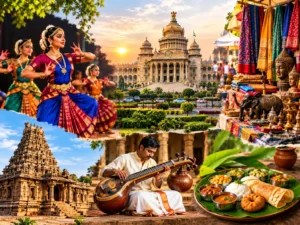
- Greet respectfully: A simple “namaskara” (the Kannada greeting) is appreciated, even if most people in tourist-facing roles speak English comfortably.
- Temple etiquette: Remove shoes before entering temples, dress modestly, and avoid pointing your feet toward deities or other people when seated.
- Bargaining: Bargaining at markets and smaller shops is normal and generally expected, though fixed-price stores and malls don’t require it.
- Tipping: Not obligatory but appreciated in restaurants and for drivers who go out of their way to help.
- Language: Kannada is the state language, but English and Hindi are both widely understood in the city, especially in tourist and business areas.
12. Practical Travel Guidelines and Packing Tips
- Clothing: Bring lightweight clothes for daytime wear, and a light sweater or jacket for cool mornings and evenings, particularly from November through February.
- Monsoon gear: During the wetter months, pack an umbrella or rain jacket and shoes that can handle wet pavement.
- Sun protection: Sunscreen and a hat are worth packing even in the cooler months, as the sun can still be strong at midday.
- Adapters: India uses Type C, D, and M plugs at 230V — check that your devices or adapters are compatible before you travel.
- SIM card / connectivity: A local prepaid SIM (available at the airport or authorized retailers with passport and photo) makes navigation, ride-hailing, and translation apps far easier to use throughout your trip.
- Health: Carry basic medication for stomach upsets, and consider travel insurance that covers hospitalization, particularly if you’re visiting during the monsoon.
13. Suggested Itineraries
2-Day Bangalore Itinerary
- Day 1: Lalbagh Botanical Garden (morning) → Bangalore Palace → MG Road and Church Street (evening food and shopping)
- Day 2: Cubbon Park and Vidhana Soudha (morning) → ISKCON Temple or Bull Temple → craft brewery or café in Indiranagar (evening)
4-Day Bangalore Itinerary
Add to the above:
- Day 3: Bannerghatta National Park or Wonderla (full day)
- Day 4: Early sunrise trip to Nandi Hills, back by early afternoon, followed by a relaxed evening
7-Day Bangalore + Around Itinerary
Add to the 4-day plan:
- Days 5–6: Mysore Palace and Chamundi Hills (overnight trip)
- Day 7: Return to Bangalore for a final relaxed day of shopping and food before departure
14. Shopping in Bangalore
Shopping is one of the easiest ways to get a feel for the city’s split personality — traditional markets a few kilometers from glossy malls.
- Commercial Street and Chickpet: Bangalore’s oldest shopping districts, good for textiles, silk sarees, jewelry, and bargain fashion. Expect narrow lanes, dense crowds, and genuinely good prices if you’re willing to negotiate.
- Malleswaram and Gandhi Bazaar: More traditional, local-feeling markets — good for flowers, spices, silk, and an authentic (rather than touristy) shopping experience.
- UB City: Bangalore’s most upscale mall, home to luxury international brands, fine-dining restaurants, and a rooftop lounge scene. Worth a visit even just to see how the city’s wealth is spent.
- Malls (Phoenix Marketcity, Orion Mall, Forum Mall): Reliable, air-conditioned options for a mix of Indian and international retail, especially useful during the hottest or wettest parts of the year.
- What to buy: Mysore silk, sandalwood products, filter coffee powder, Channapatna wooden toys, and Karnataka-style artisanal chocolate all make good souvenirs and are easy to find across the city’s markets and specialty stores.
As with most Indian markets, bargaining is expected in Commercial Street and Chickpet, but not in malls or branded stores.
15. Nightlife and Entertainment
Bangalore is often called the pub capital of India, and the reputation is largely deserved.
- Microbreweries: Indiranagar, Koramangala, and Church Street host a dense concentration of craft breweries, many with live music on weekends.
- Rooftop bars: UB City and several boutique hotels around MG Road and Vittal Mallya Road offer rooftop lounges with good city views, especially pleasant in the cooler winter evenings.
- Live music and comedy: The city has a genuinely active stand-up comedy and independent music scene — check listings on event platforms before you travel, since venues and lineups change frequently.
- Closing times: Most bars and pubs close by around 11 PM to 1 AM depending on local licensing, so plan a late dinner rather than assuming an all-night scene like some other global cities.
- Quieter evenings: If bars aren’t your scene, an evening walk around Cubbon Park, Ulsoor Lake, or a café in Indiranagar makes for a relaxed alternative.
16. Neighborhood Guide: Where to Spend Your Time
Beyond simply choosing where to stay, it helps to understand what each of Bangalore’s key neighborhoods is actually known for:
- Indiranagar: Cafés, boutique fashion, breweries, and a design-conscious, younger crowd. One of the most walkable and visitor-friendly parts of the city.
- Koramangala: The city’s startup and youth hub, packed with restaurants, co-working cafés, and a lively weekend food scene.
- MG Road / Brigade Road / Church Street: The classic central shopping and entertainment strip, good for a first orientation walk through the city.
- Jayanagar and Basavanagudi: Older, more traditional residential neighborhoods with a strong local character, temples, and some of the best South Indian food in the city.
- Whitefield and Electronic City: The IT corridors — practical rather than picturesque, but useful if your trip is business-focused.
- Hebbal and Yelahanka: Northern neighborhoods, closer to the airport, useful as a base if you have an early flight or are heading toward Nandi Hills.
17. Visa and Entry Requirements
Most international visitors to India, including those flying into Bangalore, will need a visa before arrival. India offers an e-Visa (including e-Tourist Visa) for citizens of many countries, which can typically be applied for online in advance and allows entry through Kempegowda International Airport. Requirements and eligible nationalities change periodically, so it’s worth checking the official Indian government e-Visa portal or your nearest Indian consulate close to your travel dates rather than relying on older information. Carry a printed or digital copy of your visa approval, a passport valid for at least six months beyond your travel dates, and be prepared to show proof of onward travel and accommodation at immigration if asked.
18. Health, Water, and Emergency Contacts
- Drinking water: Stick to sealed bottled water or filtered water provided by your hotel; avoid tap water and ice from unreliable sources.
- Vaccinations: There’s no universal vaccination requirement to enter India, but it’s worth discussing routine travel vaccinations (and any malaria or typhoid precautions relevant to your itinerary) with a travel clinic before you go, especially if you’re combining Bangalore with rural or forested day trips.
- Pharmacies: Well-stocked and widely available across the city, including 24-hour options in central areas; most common medications are available without difficulty.
- Hospitals: Bangalore has several well-regarded multi-specialty hospitals with English-speaking staff, commonly used by both residents and medical tourists — ask your hotel for the nearest recommended option in an emergency.
- Emergency numbers: 112 is India’s unified national emergency number, covering police, fire, and ambulance services. Keep it saved before you land.
- Travel insurance: Strongly recommended for any international visitor, and particularly worth double-checking for hospitalization and medical evacuation coverage if you’re traveling during the monsoon months.
19. Frequently Asked Questions
What is the best time to visit Bangalore?
The best overall window is from September to February, after the monsoon ends and before the summer heat sets in, with October to February widely considered peak season.
How many days do I need in Bangalore?
Three to five days covers the main attractions comfortably, while a full week lets you explore at a relaxed pace and add day trips.
Is Bangalore expensive?
No — average daily costs typically fall between $20 and $80, making it accessible for both budget and mid-range travelers.
What’s the best way to get around Bangalore?
Namma Metro is the most efficient option on routes it covers, while app-based cabs like Ola and Uber are reliable elsewhere, and metered autos work well for short hops.
Is Nandi Hills worth visiting?
Yes — the sunrise there is considered a classic Bangalore experience, especially from November to February, but it’s best visited on a weekday with an early arrival to beat both the crowds and the traffic.
When are the cheapest months to visit?
June through August, the monsoon months, typically bring the lowest hotel and flight prices, sometimes 30 to 50 percent below peak season.
Is Bangalore safe for solo and female travelers?
Bangalore is generally regarded as one of India’s safer big cities, but standard precautions apply — use metered or app-based transport, avoid isolated areas late at night, and dress modestly at religious sites.
Common Mistakes First-Time Visitors Make
A few small planning mistakes account for most of the frustration visitors report after a Bangalore trip — worth reading before you finalize your itinerary.
- Underestimating travel time between neighborhoods: Two points that look close on a map can easily be 45–60 minutes apart by road during peak traffic. Always check live traffic conditions before committing to a same-day plan that spans multiple parts of the city.
- Booking a hotel far from the sights you actually want to see: A cheaper room in a distant IT corridor can end up costing more in cab fares and lost time than a slightly pricier, better-located one near MG Road or Indiranagar.
- Skipping the metro out of unfamiliarity: Many first-time visitors default to cabs for everything, missing out on a faster, cheaper, and genuinely comfortable way to cross the city on routes the metro covers.
- Visiting Nandi Hills on a weekend: Weekend traffic to Nandi Hills can turn a scenic sunrise trip into a multi-hour ordeal — a weekday visit is far more pleasant.
- Not packing for temperature swings: Bangalore’s daytime warmth and cool evenings catch people off guard, especially those arriving from far hotter Indian cities and assuming they won’t need a light jacket.
- Overpacking the itinerary: Bangalore’s traffic makes ambitious multi-stop days harder than they look on paper — it’s usually better to plan two or three solid stops per day rather than five rushed ones.
Final Word
Following these Bangalore travel guidelines — timing your trip around the October-to-February window if possible, planning your transport around the metro and traffic patterns, and pairing the city’s core sights with at least one day trip — will get you a genuinely well-rounded visit. Bangalore rewards travelers who slow down enough to enjoy its parks, its food, and its layered history rather than treating it purely as a tech-city stopover. Plan a little, stay flexible around the traffic, and the city tends to deliver more than first-time visitors expect.