
India is one of the most rewarding — and most overwhelming — countries to travel through on your own. Between the sheer geographic scale, the number of UNESCO World Heritage Sites, the traffic, the language diversity, and the logistics of moving between cities, states, and climates, first-time visitors and even seasoned travelers often find that going it alone eats up more energy than it saves in flexibility. This is exactly why group tour packages India has become one of the most searched travel phrases among both international tourists and domestic Indian travelers planning a family, friends, or corporate trip.
Whether you’re picturing a Golden Triangle circuit through Delhi, Agra, and Jaipur, a spiritual journey along the Ganges in Varanasi, a beach-and-backwaters escape through Kerala and Goa, or a high-altitude adventure in Ladakh, there is a group tour package built for almost every interest, budget, and travel style. This guide walks through everything you need to know before booking — types of tours, top destinations, what’s typically included, how pricing works, how to pick a reliable operator, and a few sample itineraries to get you thinking about your own trip.
Why Choose Group Tour Packages in India?
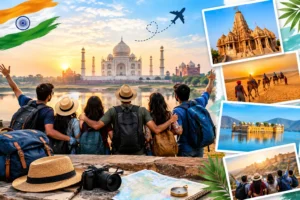
Group travel isn’t just about cost-saving, though that is a major factor. For a country as layered and logistically complex as India, group holiday packages India offer a specific set of advantages that solo or fully independent travel often can’t match.
1. Simplified Logistics
India’s road, rail, and air networks are extensive but can be confusing for first-time visitors. A well-run group tour handles transfers, train and flight bookings, hotel check-ins, and route planning, so you’re not spending your vacation hours figuring out ticket counters or negotiating auto-rickshaw fares.
2. Local Expertise and Safety
Reputable India group tour packages come with trained guides who know the terrain, the etiquette, the best times to visit crowded sites like the Taj Mahal, and how to avoid common tourist traps or scams. This is particularly valuable for solo female travelers, older travelers, or anyone visiting India for the first time.
3. Cost Efficiency
Group bookings unlock bulk discounts on hotels, transport, and monument entry fees that individual travelers rarely get access to. Shared vehicles, shared guides, and negotiated group rates on accommodation typically bring the per-person cost down significantly compared to arranging the same itinerary independently.
4. Built-In Social Experience
Traveling in a group means shared meals, shared stories, and often lifelong friendships formed over long train rides or sunrise visits to ancient forts. For solo travelers especially, this social layer is often cited as one of the best parts of the experience.
5. Access to Off-the-Radar Experiences
Established group tour operators in India often have relationships with local communities, homestays, artisans, and conservation projects that individual tourists can’t easily access — village lunches, classical dance performances, or guided nature walks in national parks, for example.
Types of Group Tour Packages Available in India
Not all group tours are the same, and understanding the categories helps you pick the right one for your travel style.
Budget Group Tours
Budget group tours India typically use 2–3 star accommodations, shared or semi-private transport, and a leaner itinerary focused on major highlights. These are popular with backpackers, students, and younger travelers who want to cover a lot of ground affordably. Group sizes tend to be larger (12–25 people), and per-person costs are lower because fixed costs are spread across more travelers.
Luxury and Premium Group Tours
On the other end, premium India tour packages for groups offer 4–5 star heritage hotels and palaces, private air-conditioned coaches, curated dining experiences, and smaller group sizes (often capped at 10–16 people). These tours are ideal for travelers who want the group-travel convenience without compromising on comfort.
Small Group / Boutique Tours
Small group tours, usually 6–14 travelers, strike a balance between the social atmosphere of group travel and the flexibility of independent trips. Because the group is smaller, itineraries can include more intimate experiences — a private cooking class, a smaller boat on the backwaters, a closer wildlife safari vehicle.
Escorted Tours
Escorted tours India include a dedicated tour manager who travels with the group for the entire trip, in addition to local guides at each destination. This continuity is especially helpful on longer, multi-region itineraries where you’re moving between very different parts of the country.
Themed and Special-Interest Tours
- Heritage and history tours — Golden Triangle, Rajasthan forts and palaces, Mughal architecture
- Wildlife and nature tours — Ranthambore, Bandhavgarh, Kaziranga, Periyar
- Spiritual and pilgrimage tours — Varanasi, Rishikesh, Amritsar’s Golden Temple, Char Dham
- Adventure tours — Ladakh, Spiti Valley, trekking in Himachal and Uttarakhand
- Beach and backwater tours — Goa, Kerala houseboats, Andaman Islands
- Festival tours — timed around Holi, Diwali, Pushkar Camel Fair, or Kumbh Mela
Customized Group Tours
For families, corporate groups, or friend circles who want a private group experience, customized group tours India allow you to build a private departure — choosing your own dates, pace, and mix of destinations — without joining a fixed public group.
Top Destinations Covered by Group Tour Packages in India
The Golden Triangle (Delhi, Agra, Jaipur)
This is the most booked circuit for group tour packages India, and for good reason. It compresses Mughal-era architecture, Rajasthani royal heritage, and the modern capital’s contrasts into a manageable 4–6 day loop. Highlights include Old and New Delhi’s monuments, sunrise at the Taj Mahal, Agra Fort, and Jaipur’s Amber Fort, City Palace, and Hawa Mahal.
Rajasthan Extended Circuit
Many operators extend the Golden Triangle into a longer Rajasthan tour covering Udaipur’s lake palaces, Jodhpur’s Blue City and Mehrangarh Fort, and sometimes Jaisalmer’s desert dunes with a camel safari and overnight desert camp. This is one of the most visually striking group itineraries in the country.
Kerala Backwaters and Hill Stations
South India’s group holiday packages India often center on Kerala — houseboat stays on the Alleppey backwaters, tea plantations in Munnar, wildlife spotting in Periyar National Park, and Kochi’s colonial-era Fort district. Kerala tours tend to have a slower, more relaxed pace than the north Indian heritage circuits.
Varanasi and Spiritual India
Group tours built around Varanasi typically include a sunrise boat ride on the Ganges, the evening Ganga Aarti ceremony, and often connect with Bodh Gaya (Buddhist pilgrimage) or Khajuraho’s temple complexes. These tours attract travelers interested in India’s religious and philosophical traditions.
Himalayan and Adventure Circuits
Ladakh, Spiti Valley, Manali, and Rishikesh anchor India’s adventure-focused group tours — monastery visits, high-altitude lake treks (Pangong Tso, Tso Moriri), river rafting, and yoga retreats. These trips generally run in the summer months when mountain passes are open.
Goa and the Konkan Coast
Beach-focused group packages combine Goa’s Portuguese-era architecture, beach towns, and nightlife with nearby coastal Maharashtra or Karnataka stops. These tend to be shorter, more relaxed itineraries popular with younger travelers.
Northeast India
A growing segment of India group travel deals now covers Assam, Meghalaya, and Sikkim — tea gardens, living root bridges, Kaziranga’s one-horned rhinos, and Buddhist monasteries in the eastern Himalayas. This region is less crowded and increasingly popular for travelers seeking something beyond the classic circuits.
South India Temple Trail
Tamil Nadu and Karnataka group tours focus on Dravidian temple architecture — Madurai’s Meenakshi Temple, Thanjavur’s Brihadeeswarar Temple, Mahabalipuram’s shore temples, and Mysore’s palace, often paired with Hampi’s ancient ruins.
Best Time to Book Group Tour Packages in India
India’s climate varies dramatically by region, so timing matters as much as the destination.
- October to March is peak season for North India, Rajasthan, and the Golden Triangle — cooler, drier weather makes sightseeing comfortable.
- November to February is ideal for South India and Kerala, avoiding both the monsoon and peak summer heat.
- April to June works for Himalayan and Ladakh-region tours, once mountain passes open, though North Indian plains become very hot during this window.
- July to September is monsoon season across most of the country — generally avoided for group tours except in the Northeast and parts of the Himalayas, where the landscape turns lush and green.
- December to January sees the highest demand and pricing due to holiday travel, so booking India multi-city tour packages 2–3 months in advance is advisable for better rates and availability.
What’s Typically Included in a Group Tour Package
Understanding inclusions helps you compare packages accurately rather than just comparing headline prices.
Usually included:
- Accommodation (based on package tier — 2-star budget to 5-star luxury)
- Transport between cities (train, flight, or private coach)
- Local sightseeing transport and entry fees to major monuments
- English-speaking (or language-specific) local guides
- Daily breakfast, and often some lunches/dinners depending on the tier
- A tour manager or escort for the full itinerary length
Usually NOT included (worth checking before booking):
- International or domestic flights to/from your starting city
- Visa fees
- Travel insurance
- Personal expenses (shopping, tips, alcohol)
- Optional excursions or “free time” activities
- Some meals, particularly dinners on free-choice days
How to Choose the Right Group Tour Operator
With dozens of group tour operators in India, from large multinational tour companies to smaller boutique local outfits, the decision can be confusing. A few filters help narrow it down:
1. Group size preference: If you want an intimate experience, look for operators capping groups at 12–16 people rather than 25–30.
2. Reviews and reputation: Check third-party review platforms rather than relying solely on the operator’s own website testimonials. Look specifically for reviews mentioning guide quality, hotel standards actually matching what was promised, and how issues were handled when things went wrong.
3. Licensing and accreditation: Legitimate operators are typically registered with India’s Ministry of Tourism or recognized industry bodies like IATO (Indian Association of Tour Operators).
4. Transparent inclusions: A trustworthy operator lists exactly what’s included, room category, meal plan, and transport type — vague packages with “deluxe accommodation” and no specifics are a red flag.
5. Cancellation and payment terms: Read the fine print on deposits, cancellation windows, and refund policies before paying.
6. Physical activity level matching your group: Tours are usually labeled Easy, Moderate, or Challenging — important if your group includes older travelers or anyone with mobility considerations.
Cost Breakdown: What to Expect
Pricing for group tour packages India varies enormously based on trip length, season, accommodation tier, and inclusions, but here’s a general framework travelers can use to budget:
| Tour Type | Duration | Approx. Per-Person Cost (USD) |
|---|---|---|
| Budget Golden Triangle | 4–6 days | $250 – $500 |
| Standard Rajasthan Circuit | 8–10 days | $600 – $1,200 |
| Kerala Backwaters & Hills | 6–8 days | $500 – $900 |
| Luxury Heritage Circuit | 8–10 days | $1,500 – $3,500+ |
| Himalayan Adventure Tour | 7–10 days | $700 – $1,400 |
| Multi-region Grand Tour | 14–21 days | $1,800 – $4,000+ |
These figures generally exclude international airfare and visa costs. Domestic group tours booked within India by Indian travelers tend to run considerably lower, often ₹15,000–₹60,000 depending on duration and comfort level.
Sample Group Tour Itineraries
Sample 1: Classic Golden Triangle (5 Days / 4 Nights)
- Day 1: Arrive Delhi, evening orientation walk in Old Delhi
- Day 2: Delhi sightseeing — Red Fort, Jama Masjid, Humayun’s Tomb, Qutub Minar; evening drive to Agra
- Day 3: Sunrise at the Taj Mahal, Agra Fort visit, drive to Jaipur via Fatehpur Sikri
- Day 4: Jaipur — Amber Fort, City Palace, Hawa Mahal, local bazaar time
- Day 5: Return to Delhi, departure
Sample 2: Rajasthan Grand Circuit (10 Days / 9 Nights)
- Delhi → Mandawa (Shekhawati frescoes) → Bikaner → Jaisalmer (desert camp & camel safari) → Jodhpur (Mehrangarh Fort) → Udaipur (Lake Pichola) → Pushkar → Jaipur → Delhi
Sample 3: South India Discovery (9 Days / 8 Nights)
- Kochi (Fort Kochi, spice markets) → Munnar (tea plantations) → Thekkady/Periyar (wildlife) → Alleppey (houseboat overnight) → Kovalam (beach) → departure
These frameworks are commonly used across India group tour packages and can be adjusted for pace, add-on destinations, or comfort tier.
Group Travel Tips for a Smooth Trip
- Pack light but versatile — India’s climate can shift quickly between cities, especially on north-to-south or plains-to-mountains routes.
- Carry a physical copy of your itinerary and hotel confirmations, since connectivity isn’t always reliable in smaller towns.
- Respect dress codes at religious sites — shoulders and knees covered is a safe default.
- Stay hydrated and be cautious with street food early in the trip until your system adjusts, especially on longer group itineraries.
- Keep small denominations of local currency for tips, small purchases, and situations where cards aren’t accepted.
- Communicate dietary restrictions early — most operators can accommodate vegetarian, vegan, or allergy-specific needs if informed in advance.
- Build in buffer days if your schedule allows, since domestic flight and train delays are not uncommon.
Group Tours vs. Solo/Private Travel in India
| Factor | Group Tour | Solo/Private Travel |
|---|---|---|
| Cost per person | Lower (shared expenses) | Higher |
| Flexibility | Fixed itinerary | Fully flexible |
| Local expertise | Built-in guides | Self-researched |
| Social experience | High | Depends on traveler |
| Logistics burden | Handled by operator | Self-managed |
| Pace control | Group-paced | Self-paced |
Neither option is objectively better — it depends on whether you value flexibility over convenience, and whether you’re traveling with others who’d enjoy the shared social dynamic of a structured tour.
Frequently Asked Questions
What is the average cost of group tour packages in India?
Costs range widely by tier and duration, from around $250 for a short budget Golden Triangle tour to $3,500+ for a luxury multi-region circuit, generally excluding international flights.
How many people are typically in a group tour in India?
Group sizes range from small boutique groups of 6–14 travelers to larger budget tours with 20–30 people, depending on the operator and tour category.
Is it safe to join a group tour in India as a solo traveler?
Yes — group tours are one of the most recommended ways for solo travelers, particularly solo women, to explore India safely, since they include vetted transport, accommodation, and local guides.
What is the best time of year for group tours in India?
October through March is generally the most comfortable window for North India and Rajasthan, while November through February suits South India best; the Himalayan region is best visited from April to June.
Do group tour packages include flights?
Most India group tour packages include domestic transport between cities on the itinerary but exclude international flights to and from India, which travelers book separately.
Can group tours be customized for families or private groups?
Yes, most operators offering customized group tours India can build private departures with adjusted pacing, activity levels, and destination mixes for families, friend groups, or corporate travel.
What should I check before booking a group tour operator?
Review the operator’s licensing, published reviews, transparency on inclusions/exclusions, group size, cancellation policy, and how closely trip descriptions match what past travelers actually experienced.
Final Thoughts
India rewards travelers who see it broadly — layered history, regional cuisines, dramatic shifts in landscape, and centuries of architecture within a single itinerary. For most first-time visitors, and even many repeat travelers, group tour packages India remain the most efficient way to experience that breadth without getting lost in logistics. Whether you’re drawn to the marble domes of Agra, the palaces of Rajasthan, the backwaters of Kerala, or the high passes of Ladakh, there’s a group itinerary — budget, luxury, or somewhere in between — built to get you there comfortably, safely, and with good company along the way.